
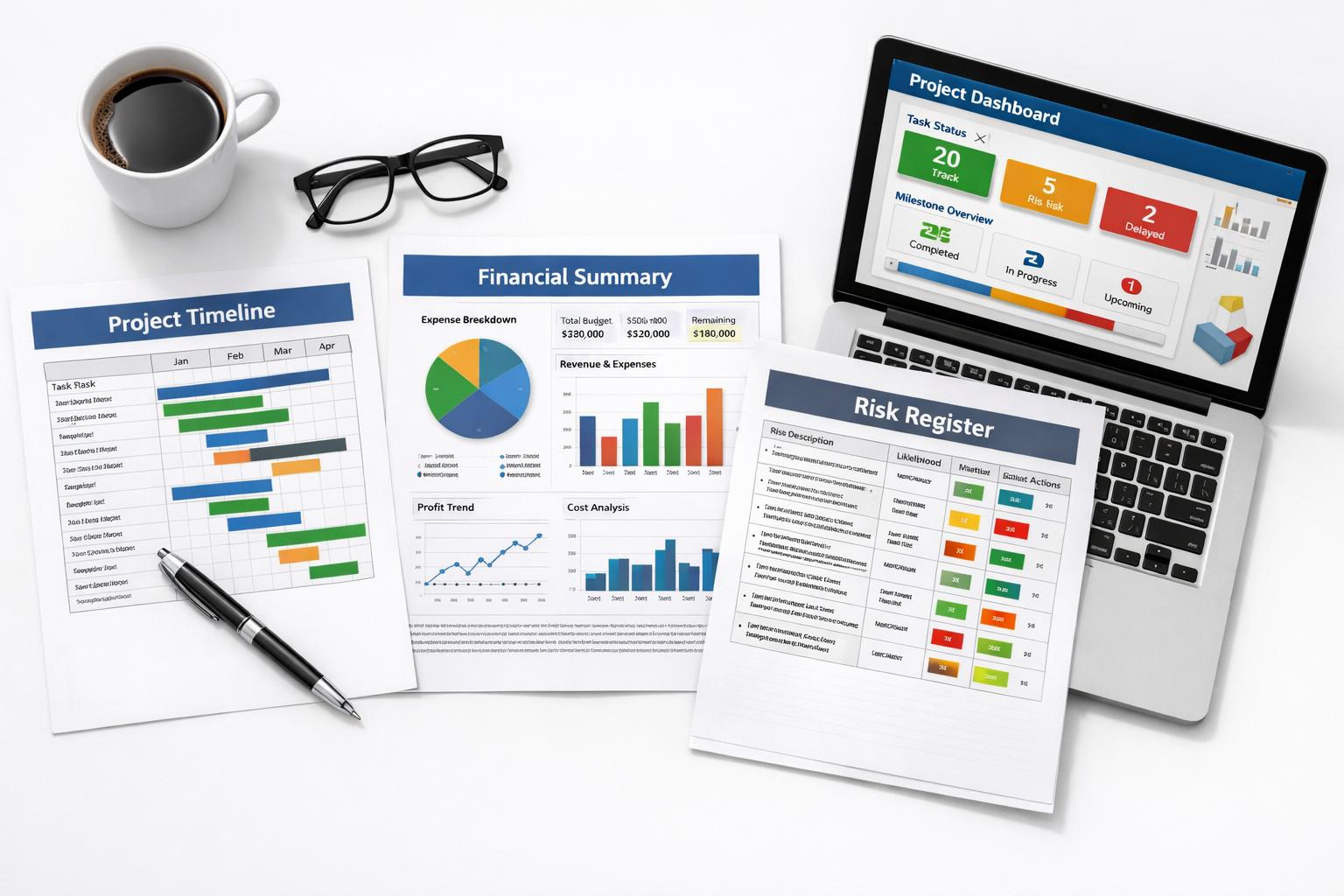
Understanding Risk in Small-Scale Development | EME Rooming Houses
Small-scale property development, projects under $5 million, accounts for a significant share of Australia's housing delivery. Yet it is the segment most likely to be run without structured governance, formal risk management, or professional project oversight. The consequences are predictable: blown budgets, missed timelines, compliance failures, and capital partners left wondering where the money went.
This article examines the governance gaps that commonly appear in small-scale development, the real-world risks they create, and what institutional-grade project management looks like when applied to smaller projects. It is written for anyone considering a development partnership and wanting to understand what to look for and what to avoid.
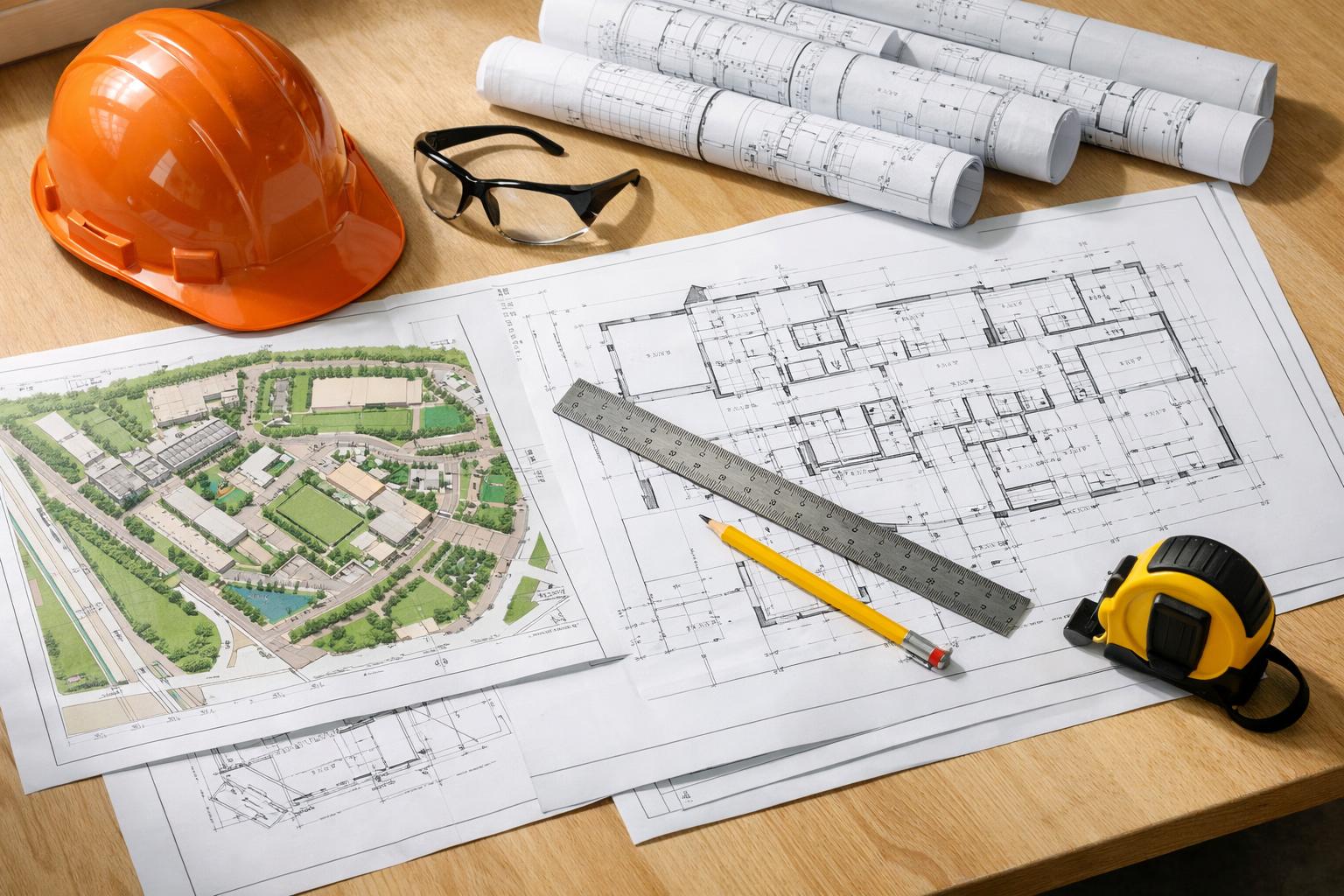
Structured governance begins before a single dollar is spent, with rigorous feasibility analysis and project planning.
Why Small Projects Get Treated Differently
There is an assumption in the property industry that small projects do not require the same level of governance as large ones. A $60 million shopping centre redevelopment will have a dedicated project manager, a program schedule, a risk register, weekly reporting, cost tracking, quality gates, and independent oversight. A $1.5 million residential conversion often gets a builder, a spreadsheet, and a handshake.
The logic seems reasonable on the surface. The project is smaller, so surely the management overhead can be lighter. But this thinking confuses project size with project risk. In practice, many of the risks that can derail a development exist regardless of scale.1
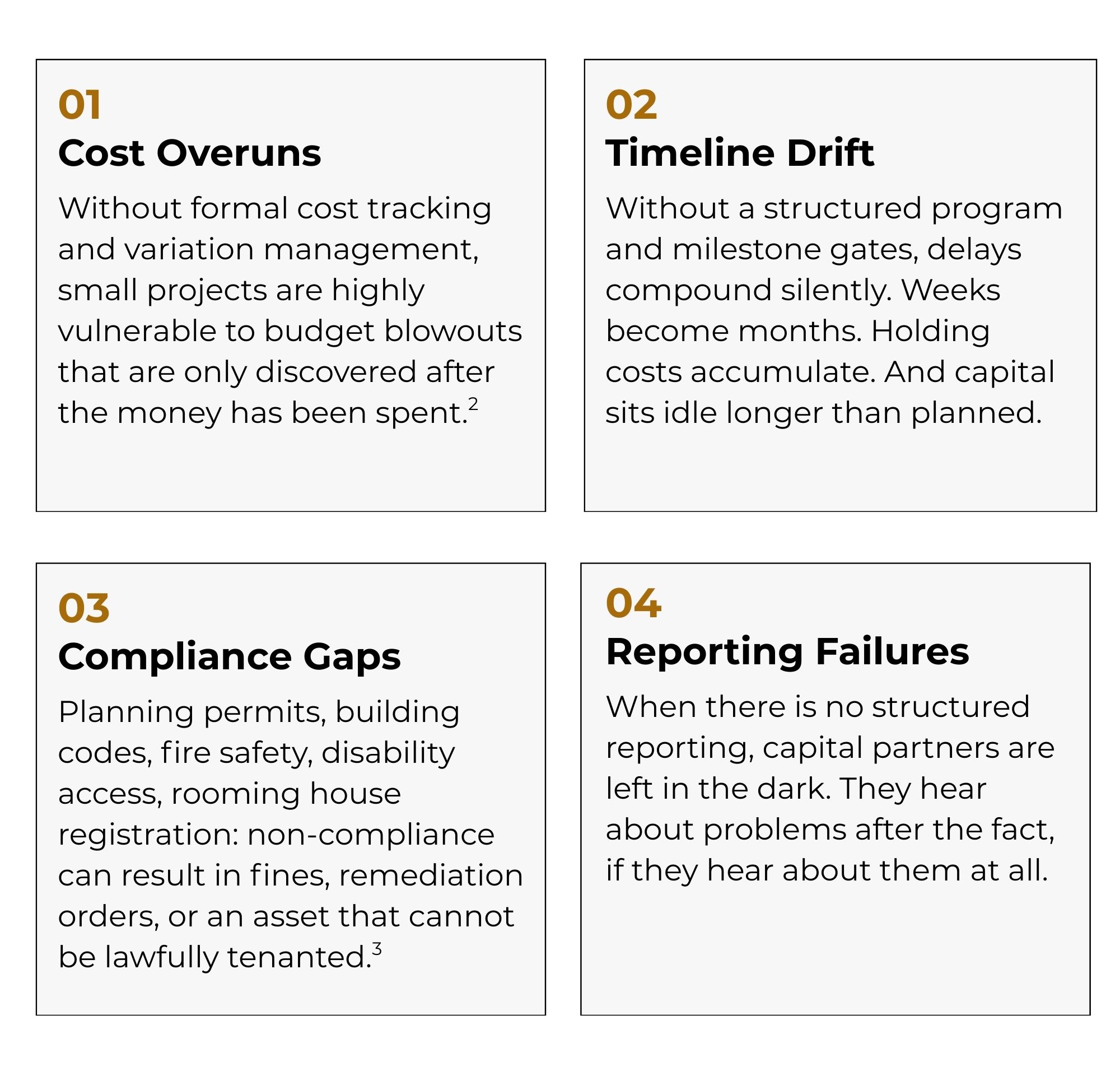
These risks do not scale linearly with project size. A $1.5 million project with a 15% cost overrun has the same proportional impact on the capital partner as a $60 million project with a 15% overrun. The dollars are smaller, but the percentage loss is identical, and for many capital partners in the small-scale space, the amount at stake represents a significant portion of their available capital.

Structured project governance is not overhead. It is the mechanism that protects capital at every stage.
The Six Governance Gaps That Cost Capital Partners Money
Based on our experience across 30+ years of institutional project delivery, these are the governance gaps we see most frequently in small-scale development, and the ones that cause the most damage.
1. No Feasibility Gate
The single most expensive mistake in development is proceeding with a project that should never have started. Without a formal feasibility assessment covering demand analysis, realistic cost estimation, planning risk, and financial modelling, developers commit capital to projects that are marginal at best and unviable at worst. A rigorous feasibility gate kills bad deals before they consume capital.[4]
2. No Independent Cost Review
Many small-scale developers rely on a single builder's quote to set their budget. Without independent quantity surveying or competitive tender processes, the starting budget is often inaccurate, and every subsequent cost variation compounds the error.[5] An independent cost review at the outset establishes a realistic baseline against which the entire project can be managed.
3. No Structured Program
A "program" in construction is not a deadline. It is a sequenced schedule of every activity, dependency, and milestone in the project. Without one, there is no way to measure whether the project is on track, identify early warning signs of delay, or hold contractors accountable for their commitments. When there is no program, there is no accountability.
4. No Variation Management
Variations, meaning changes to scope, design, or specifications during construction, are where budgets go to die. In institutional projects, every variation must be formally documented, costed, and approved before work proceeds. In small-scale development, variations are often agreed verbally on site and only costed after the fact. This is how $50,000 budget overruns happen, $5,000 at a time.
5. No Risk Register
A risk register is a living document that identifies project risks, assesses their likelihood and impact, and documents the mitigation strategy for each one.6 It is standard practice on any institutional project. In small-scale development, risk management is often informal, meaning risks are identified only after they have materialised, and the damage is done.
6. No Structured Reporting
If a capital partner has to call the developer to find out how the project is going, the governance has already failed. Structured reporting, at a minimum, monthly project updates covering budget status, program status, risk updates, and upcoming milestones, is not a luxury. It is the mechanism that maintains trust between the developer and the capital partner throughout the project.
Governance is not overhead. It is the mechanism that protects capital, ensures accountability, and delivers certainty. Every project deserves it, regardless of size.
What Institutional-Grade Governance Looks Like at Small Scale
Institutional governance does not mean institutional bureaucracy. The principles are the same whether the project is $1.5 million or $60 million, but the application is scaled to the project's complexity. Here is what it looks like in practice.
What to Expect From a Well-Governed Development
Formal feasibility assessment before any capital is committed, with a clear go/no-go decision point
Independent cost estimation and competitive builder procurement
A structured project program with defined milestones and delivery gates
Formal variation management where every scope change is documented, costed, and approved before work proceeds
An active risk register, reviewed and updated throughout the project lifecycle
Structured reporting (monthly at minimum) covering budget, program, risk, and upcoming milestones
Defined project roles and responsibilities with clear escalation paths for issues
Quality assurance inspections at key construction stages, not just at practical completion
Independent legal documentation for all partnership arrangements, prepared by qualified professionals
Defined exit timelines and capital waterfall structures established from day one
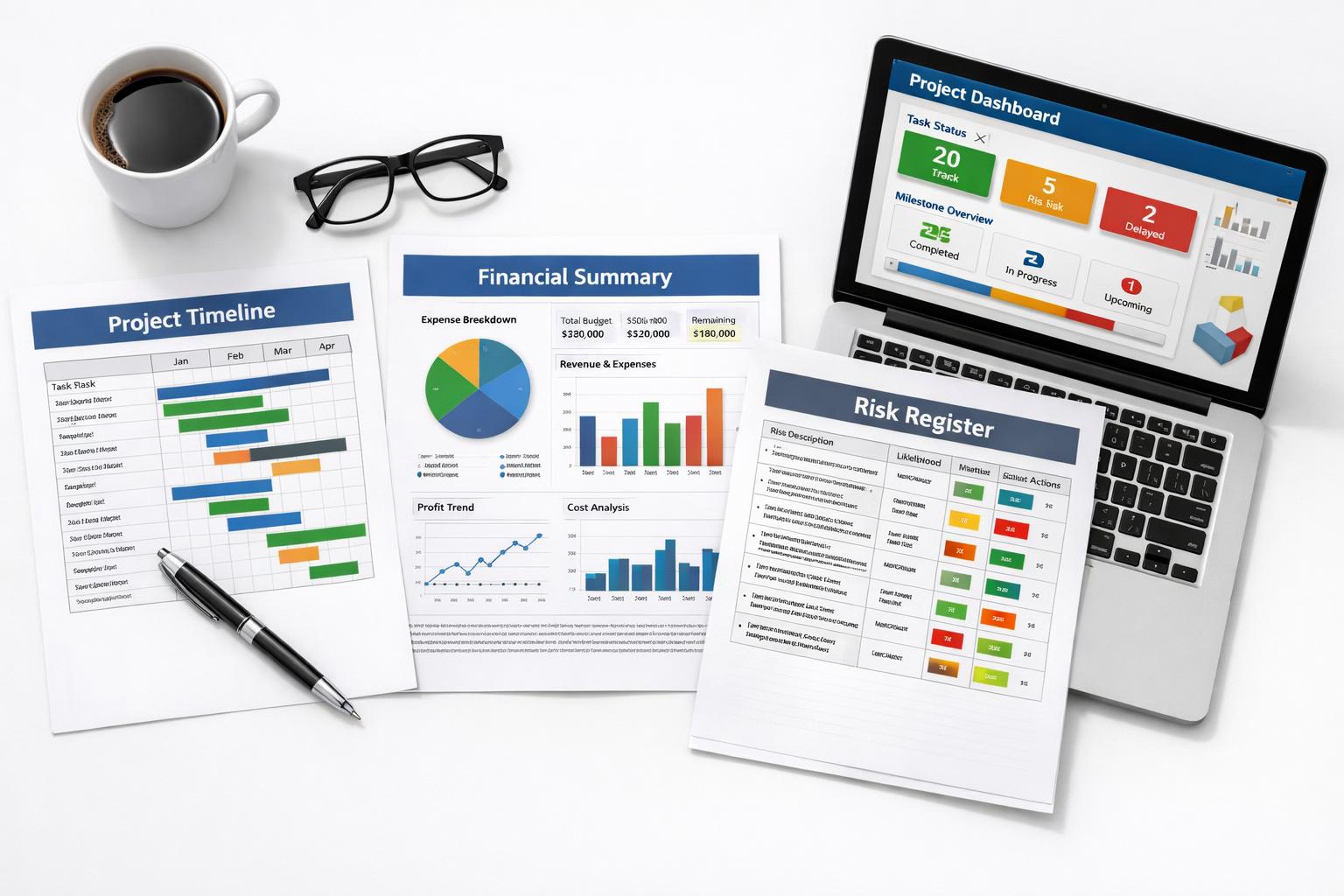
Structured reporting ensures capital partners have full visibility at every stage of the project.
None of this is exotic. All of it is standard practice on commercial and institutional projects. The question is simply whether the developer brings the discipline to apply it at a smaller scale, or whether they consider governance to apply only to "big" projects.
Questions Every Capital Partner Should Ask
Before committing capital to any development project, whether co-living, residential, or commercial, it is worth asking the developer a specific set of governance questions. The quality of the answers will tell you a great deal about how the project will actually be managed.
What does your feasibility process look like, and what criteria must a project meet before you proceed?
How is the construction budget established, and is an independent cost review involved?
Is there a structured project program, and how are milestones tracked and reported?
How are variations managed during construction, and what is the approval process?
Do you maintain a risk register, and how often is it reviewed?
What reporting will I receive, how frequently, and in what format?
How are builder contracts structured, and what protections are in place for defects and delays?
What happens if the project encounters a material issue, and what is the escalation process?
Are all partnership arrangements documented by independent lawyers?
What are the defined exit terms, and how is the capital waterfall structured?
A developer who welcomes these questions and has clear, documented answers for each of them is one who takes governance seriously. A developer who deflects them, or treats them as unnecessary for a project "this size," is telling you something important about how your capital will be managed.
How EME Rooming Approaches Governance
EME Rooming was founded on the principle that every project deserves institutional-grade governance, regardless of its size. Our Managing Director, Georgia Hartin, has spent 30+ years delivering projects for organisations such as Lend Lease, Vicinity, La Trobe University, Monash University, and Woolworths Group.7 The governance frameworks used on those $60M+ projects are the same frameworks applied to every EME Rooming co-living development.
This is not because small projects need more paperwork. It is because structured governance separates disciplined delivery from hopeful development and allows us to look every capital partner in the eye and account for every dollar, every milestone, and every decision.
We are property developers, not financial advisers. We always recommend that prospective partners seek independent legal, financial, and taxation advice before entering into any arrangement.8 But we believe strongly that the governance conversation should happen before the financial conversation, because without governance, the financial outcomes are left to chance.

Disciplined governance delivers completed, compliant, income-ready co-living assets on time and on budget.
The governance gaps that cost capital partners money are not exotic risks. They are predictable, preventable failures of discipline. The only question is whether the developer you partner with treats governance as optional or essential.
References
National Housing Supply and Affordability Council (NHSAC), State of the Housing System 2024. Documents housing delivery challenges, construction cost pressures, and market conditions affecting small-scale development. nhsac.gov.au
Australian Bureau of Statistics (ABS), Building Activity, Australia, 2025. Data on construction cost movements and residential building activity. abs.gov.au
Victorian Building Authority (VBA), Rooming House Standards and Compliance Requirements. Outlines minimum standards for rooming house registration, fire safety, and accessibility. vba.vic.gov.au
Australian Institute of Building (AIB), Best Practice Guidelines for Project Governance. Covers feasibility assessment, project initiation, and go/no-go decision frameworks. aib.org.au
Australian Institute of Quantity Surveyors (AIQS), Cost Management Standards and Guidelines. Addresses independent cost estimation, tender evaluation, and variation management. aiqs.com.au
Standards Australia, AS/NZS ISO 31000:2018, Risk Management Guidelines. National standard for risk management frameworks applicable to construction and development projects.
Master Builders Australia, Building and Construction Industry Report 2024/25. Industry data on project delivery, workforce capacity, and construction sector performance. masterbuilders.com.au
Australian Securities and Investments Commission (ASIC), Guidance on Managed Investment Schemes and Property Development. Regulatory guidance on the distinction between development partnerships and financial products. asic.gov.au
National Housing Supply and Affordability Council (NHSAC), State of the Housing System 2025. Updated analysis of housing supply pipeline and delivery constraints. nhsac.gov.au