
Recurring Income vs. One-Off Development Profit | EME Rooming Houses
Most property development follows the same playbook: acquire land, build, sell, and move on. The entire model hinges on one transaction, the sale, and everything leading up to it is a cost. If the market shifts, construction blows out, or the end product doesn't attract buyers at the right price, the project can go from profitable to painful in a matter of months.
There is another approach. Rather than building to sell, some developers are now building to hold, creating properties that generate ongoing rental income from the day they are completed. In the co-living sector, this "build to income" model is gaining traction because the economics are strong, the demand is structural, and the risk profile is fundamentally different.
This article explores the distinction between the two approaches and examines why recurring income from co-living development is attracting serious capital partners.
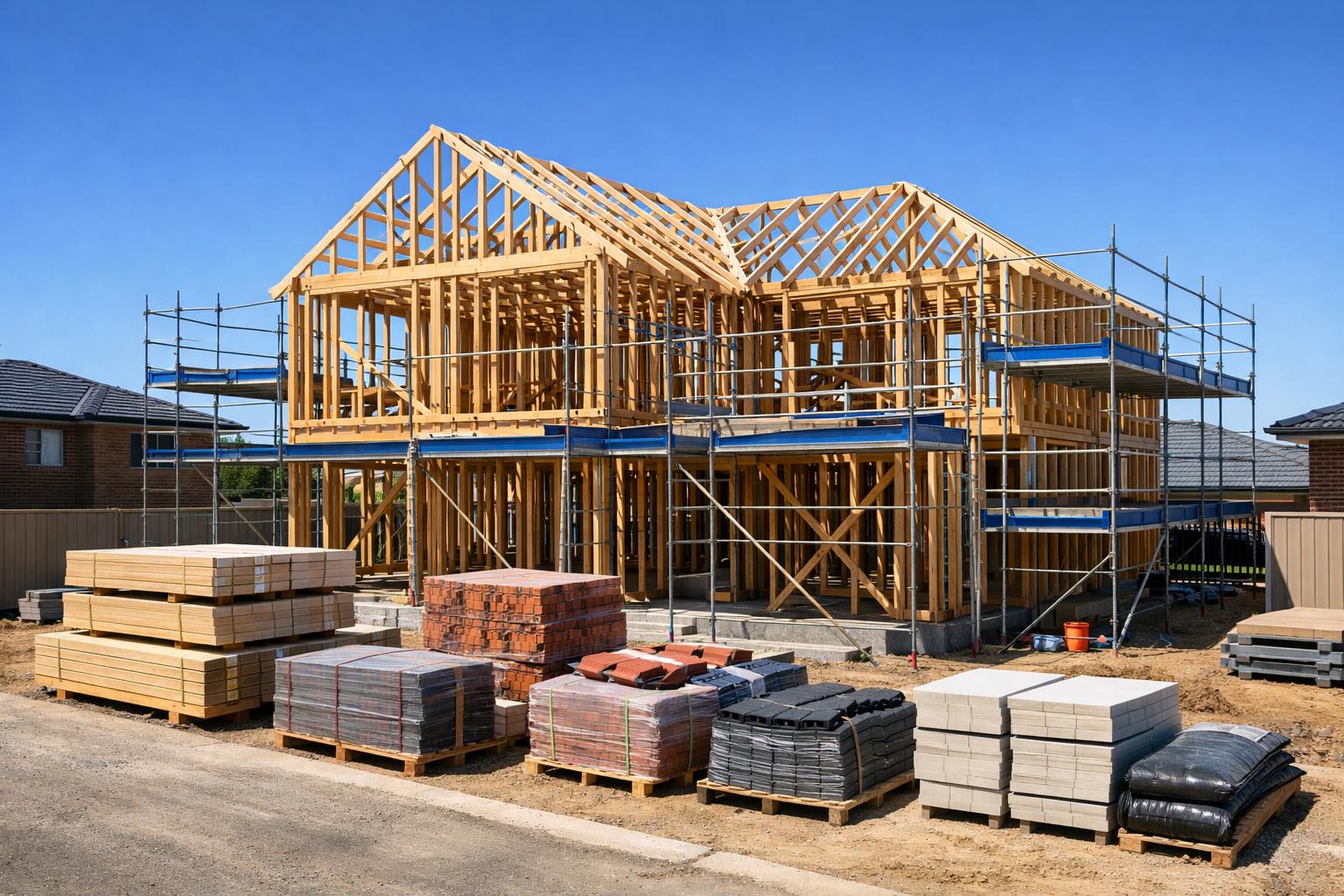
The traditional development model concentrates all profit in a single transaction: the sale.
The Traditional Model: Build, Sell, Repeat
The conventional development model is well understood. A developer acquires a site, secures planning approval, constructs dwellings, and sells them, ideally at a margin that covers costs, risk, and profit. It has created enormous wealth in Australia, and there is nothing inherently wrong with it.
But it has vulnerabilities that capital partners should understand clearly before committing to any project.
The entire profit is concentrated in a single event: the sale. If the sale price falls short of projections, the project can underperform dramatically
Market timing risk is significant. A development that takes 18 to 24 months to deliver is exposed to shifts in buyer sentiment, interest rate movements, and credit availability [1]
There is no residual income after the sale. Once the property is sold, the income stops, and the developer (and their capital partners) must find and fund the next deal to generate further income
Pre-sale requirements from lenders can create pressure to commit to pricing before the market validates demand at that level
Construction cost overruns directly erode the profit margin, and there is no ongoing income stream to absorb the impact [2]
None of this means the build-to-sell model does not work. It clearly does, and it has done so for decades. But it does mean that capital partners need to understand they are exposed to a concentrated, single-outcome risk, and that the quality of the developer's execution and market judgement is the primary determinant of the outcome.
The Alternative: Build to Income
The build-to-income model works differently. Rather than constructing a property to sell, the developer creates one designed to generate recurring rental income from the moment of completion. The property is held, managed, and operated as an ongoing income-producing asset.
In co-living development, this model is particularly effective because the rental income characteristics of a multi-tenancy shared home are fundamentally different from those of a traditional single-tenancy rental.
Build to Sell
One-Off Profit
Income depends on a single sale event
Exposed to market timing risk
No residual income after sale
Must find and fund the next deal
Construction overruns directly cut the margin
Capital is returned in a lump sum (if the sale succeeds)
Build to Income
Recurring Income
Income begins when tenants move in
Less sensitive to short-term market swings
Ongoing income stream from the asset
Portfolio compounds over time
An income stream can absorb cost variations
Capital works harder across a longer horizon
Build-to-income properties generate rental revenue from the moment a tenant occupies, not from a single sale.
Why Co-Living Amplifies the Build to Income Model
Co-living does not just offer a build-to-income path. It amplifies the model's advantages in several important ways.
Higher Income Per Property
A standard residential property generating $500 to $600 per week in rent can be developed into a compliant co-living home generating $1,500 to $2,200+ per week across multiple rooms.[3] The income density per property is significantly higher, shifting the economics toward holding rather than selling.
Diversified Tenant Base
A traditional rental property has one tenant (or one tenanting household). If that tenant leaves, the property generates zero income until a replacement is found. A co-living home with 5 to 9 rooms has 5 to 9 independent income streams. If one room is vacant for a fortnight, the property still generates substantial income from the remaining rooms. This diversification materially reduces vacancy risk.
Deeper Demand Pool
Because individual rooms are priced well below median rents for whole properties, co-living attracts demand from a broader cross-section of the rental market, including essential workers, students, early-career professionals, and people in life transitions.[4] This deeper demand pool supports sustained occupancy even in softer rental markets.
Operational Scalability
The operational framework for co-living, including tenant screening, maintenance schedules, compliance management, and financial reporting, can be systematised and replicated across multiple properties. This means each additional property in the portfolio becomes more efficient to operate, improving per-property performance as the portfolio grows.
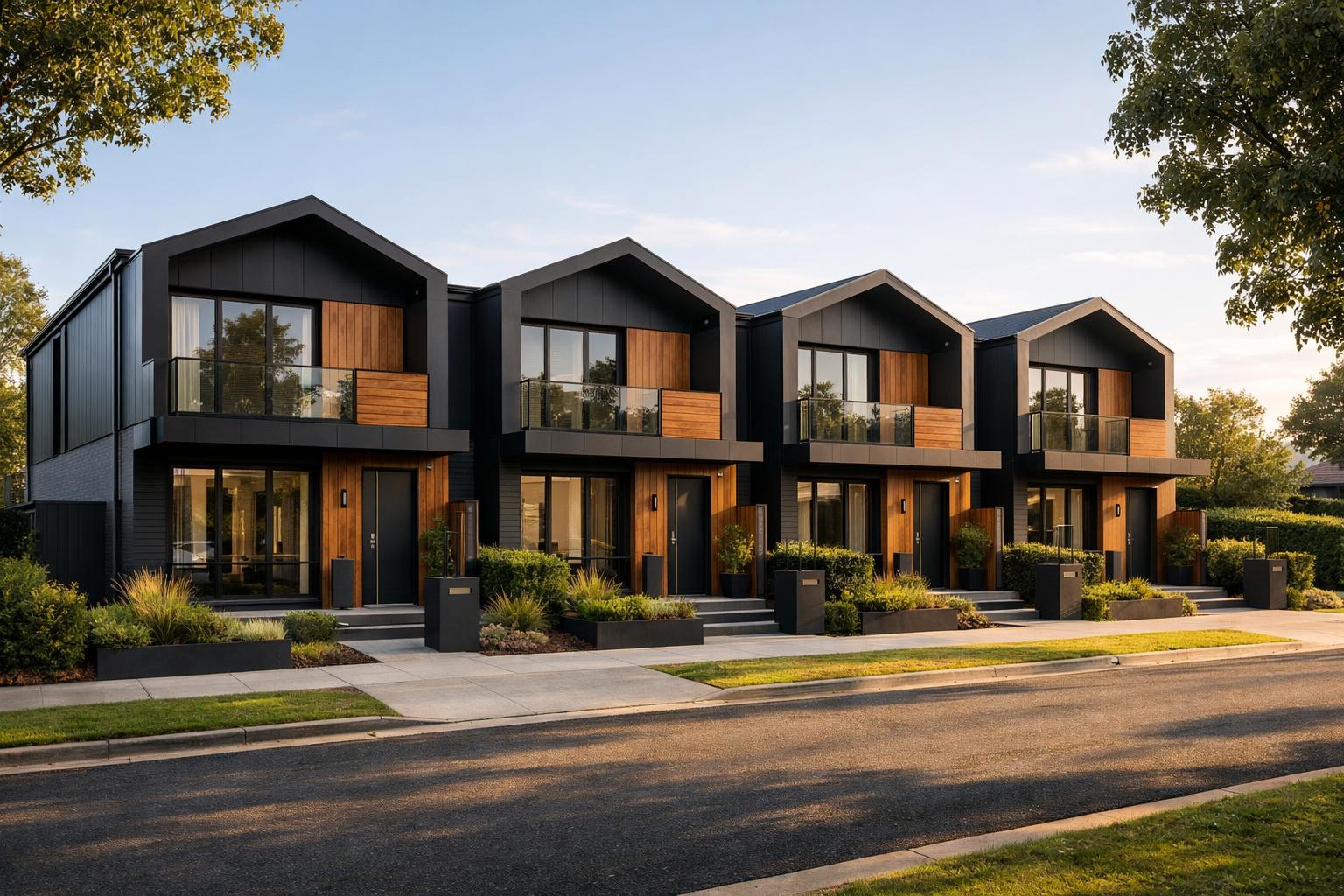
The co-living operational model becomes more efficient with each additional property in the portfolio.
The question is not just what you build. It is what happens after you build it. Recurring income changes the answer.
What This Means for Capital Partners
For people contributing capital to property development, the distinction between build-to-sell and build-to-income is not academic. It affects the risk profile of their participation, the timeline for outcomes, and the ongoing nature of the income their capital helps create.
In a build-to-sell arrangement, the capital partner's outcome is tied to a single event. In a build-to-income arrangement, the capital can be structured to participate in ongoing project income, creating a different relationship between the capital contributed and the outcomes generated.
Neither model is inherently superior. The right structure depends on the individual's goals, timeline, risk appetite, and preferred level of involvement. What matters is that the distinction is clearly understood before any commitment is made, and that the developer can articulate exactly how the project is structured, how income will be generated, and what protections are in place.
How EME Rooming Approaches This
EME Rooming develops co-living properties designed to generate recurring rental income. We build to hold and operate, not to flip. Every project is assessed through rigorous feasibility modelling before any construction begins, and every partnership is structured with defined timelines, clear reporting, and documented legal arrangements.
We offer three distinct partnership models, each designed for a different capital profile, risk appetite, and preferred level of involvement. Whether a partner wants structured project income, equity participation, or turnkey delivery, the framework is built around disciplined execution and transparent governance.
We are property developers, not financial advisers. We always recommend that prospective partners seek independent legal, financial, and taxation advice before entering into any arrangement.
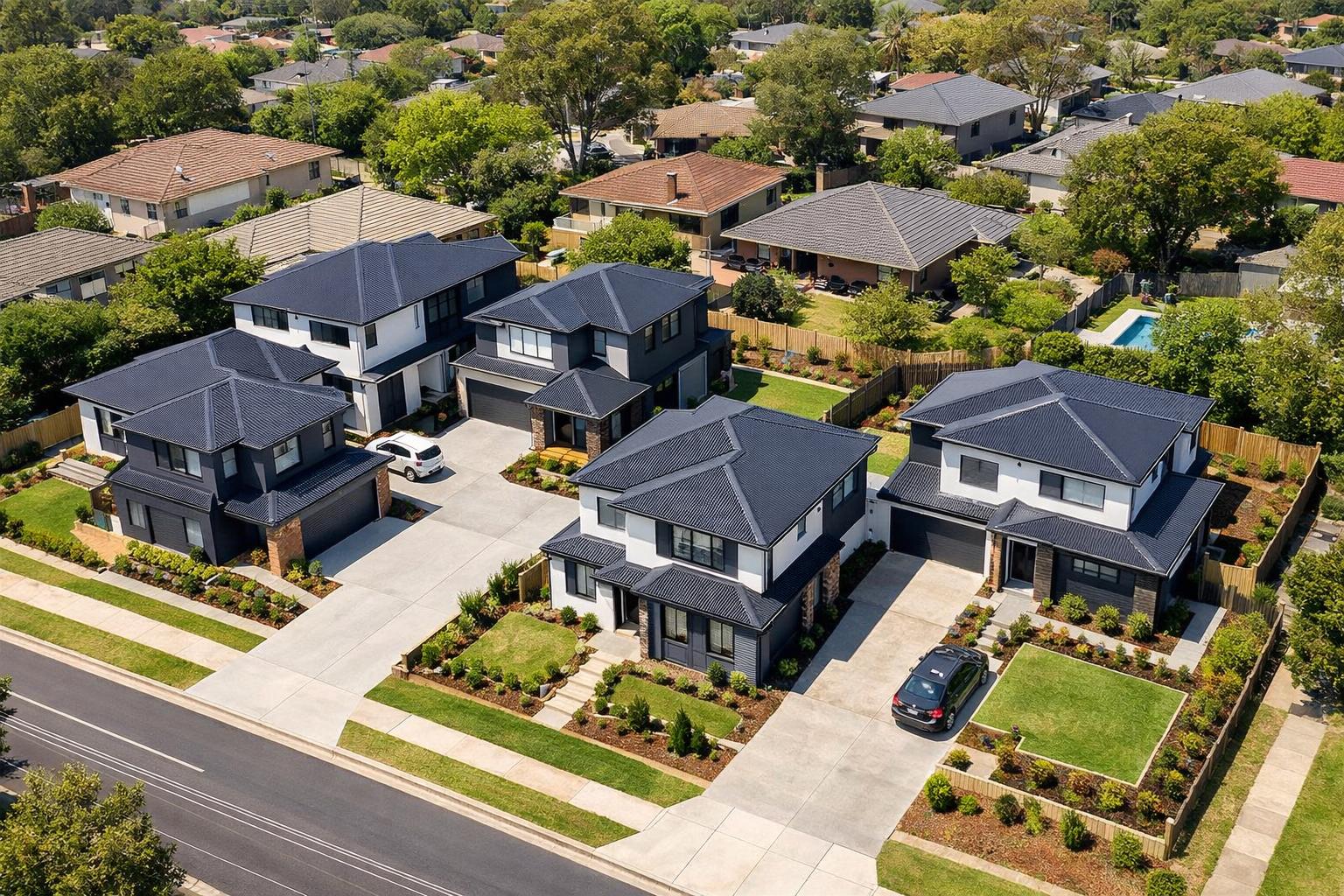
Disciplined development backed by recurring rental income: a model built for the long term.
Build once. Generate income continuously. That is the model, and it is why co-living development is attracting serious capital partners who think in decades, not quarters.
References
National Housing Supply and Affordability Council (NHSAC), State of the Housing System 2024. Discusses market timing risk in residential development and impact of interest rate cycles on buyer sentiment. nhsac.gov.au
Australian Bureau of Statistics (ABS), Building Activity, Australia, 2025. Documents rising construction costs and their impact on development margins. abs.gov.au
Domain Group, September 2025 Rental Report, as reported by SBS News, 27 December 2025. Capital city median weekly rent of $650. Individual co-living room pricing based on EME Rooming operating data. sbs.com.au
Australian Institute of Health and Welfare (AIHW), Housing Affordability, 2025. Citing rental stress among low-income households and affordability gap driving demand for lower-cost housing options. aihw.gov.au
Australian Bureau of Statistics (ABS), Latest Insights into the Rental Market, 2025. National rental vacancy rate of 1.6% supporting structural demand for rental housing. abs.gov.au
CoreLogic, Quarterly Rental Review, Australia, April 2025. National rents climbed 38.4% since March 2020, equivalent to an additional $182 per week.
National Housing Supply and Affordability Council (NHSAC), State of the Housing System 2025. Net housing completions fell short of newly formed households by approximately 68,000 in 2024. nhsac.gov.au
Australian Bureau of Statistics (ABS), Housing Serviceability, 2025. Documents rental price growth and household financial stress indicators. abs.gov.au